

1
/
کا
1
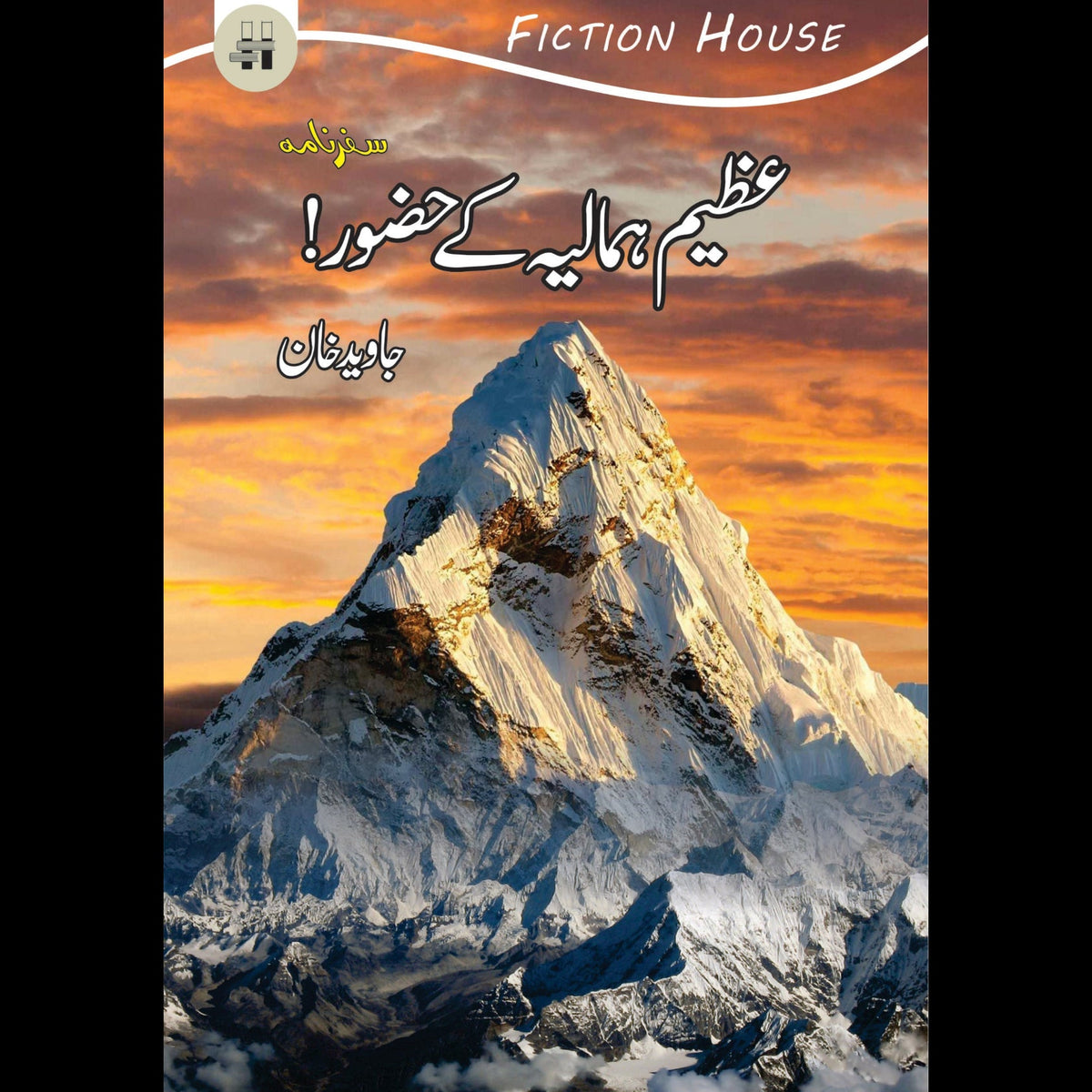
عظیم ہمالیہ کے حضور
عظیم ہمالیہ کے حضور
عام قیمت
Rs.350.00 PKR
عام قیمت
Rs.700.00 PKR
فروخت کی قیمت
Rs.350.00 PKR
شپنگ کا حساب چیک آؤٹ پر لگایا جائے گا۔
تعداد
پک اپ کی دستیابی لوڈ نہیں ہو سکی۔
Qamar Khan
After grazing in open fields like a buffalo and then bathing in a pond—or rather, wallowing in the mud—eating apples and insults from the gardener’s orchard, lying in the sun to chew the cud, and going to sleep at dusk after hearing mother's scolding and getting "dottay" (beatings); in such a daily routine, there was no room for travel. If it was necessary to go to Pindi, one had to take a beating at Mang to save oneself from being robbed, and also travel a few miles on foot. When I gained some sense, the state was such that upon reaching Mang in the dead of night, we would stand respectfully. "Come sir, we have brought this seat reserved for you from Pindi. Please, come and sit." The first time I went to Karachi, a fight broke out at the very beginning of the journey. Consequently, I was handed over to the Railway Police at Wazirabad. I got out of it by paying a bribe and reached Karachi on the third day. That is why I loathe traveling. Therefore, whenever I traveled, it was out of compulsion. I have never been able to get along with those obsessed with travel for pleasure. I prefer people like buffaloes who, once they sit down, show no signs of getting up. But my elders used to object to my sitting as well. Sometimes I would sit on a high, dry branch of a persimmon or walnut tree, sometimes on a "half-wall," or on the roof of the house. The elders would say, "Why are you laying eggs on the pegs?" Since then, I started laying eggs in school instead of on "pegs." But brother Javed Khan is under the misconception that this is some educated man. If the occasion to write today's article had not arisen, this illusion would have persisted for long, but how long can the truth be hidden? Traveling doesn't suit me in any way. My condition deteriorates due to sleep and exhaustion. I get neither decent food nor drink. Even in big airlines, one gets only a handful of water to drink. And whether anything else happens or not, constipation is inevitable. One day and night of travel ruins an entire week. So, if a poor soul who gets sick just by the mention of travel has to read a travelogue, then imagine what they must go through. And if the travelogue is not about the colorful streets of Europe or America, but about the rugged mountains of the Himalayas, then consider that there is no hope for either. Either the reader will not survive, or the travelogue will not. This journey was also not an easy one. Especially in days when one feels nauseous just by seeing food and drinks, feels dizzy, and cannot sleep properly, one should avoid traveling. Let alone heading out on such dangerous paths. Well, what is done is done, let it be. We would have let it be if it was only about the journey. But he even wrote a diary of such a difficult journey. Surely, this is not a task for an ordinary person. The author in question has worked so hard on the book that it must have taken him several weeks to refine its edges. Anyway, whatever hard work was to be done, has been done; now the field of work has changed.
Before reading the book, this thought kept bothering me that the author could have written something else instead of a travelogue. But when I started reading the travelogue, I had to change my opinion. "Azeem Himalaya ke Huzoor" (In the Presence of the Great Himalayas) is the author's first work. And a beautiful work it is. The choice of words and imagery is unparalleled. His love for the region is dripping from his writing. He has described the entire journey in such a beautiful manner that for the first time, a desire to travel has awakened in the heart of a "sedentary" person like me. In fact, now this thought keeps nagging me: why have I not traveled to these beautiful peaks, gorges, and valleys until today? They say he who has not seen Lahore has seen nothing. After reading this travelogue, we say that he who has not seen the Himalayas has seen nothing. The whole world has its eyes on the Himalayas. It is just that it is hidden from our eyes. By writing this travelogue, the author has, as it were, rediscovered the Himalayas for us. In this journey, he has tried his best to show the readers what he saw. He writes:
"The sun had departed from the Sur Chauk. But golden rays were still lingering on the peaks of the Trans-Himalayas and the Hindu Kush. The house of snow was spread as far as the eye could see. Its vastness refused to be contained within the eyes. The rays of the Sun God had cast a red mantle over the walls and doors of the white and cold house. A flush had spread over the lips and cheeks of all the snowy peaks. As if thousands of brides were sitting adorned in red veils, looking on with shy smiles. Every peak was a bride of the evening. The beauty of each was distinct from the other."
"The Hindu Kush and the Karakoram were standing respectfully in the court of the great Himalayas, holding their breath and listening to the tale of that time. The Pir Panjal looked like an innocent child. The age was reflecting from the face of Haji Pir. The Himalayas said, 'On this surface of the earth, along with other life, Adam (peace be upon him) finally appeared. I have seen the children of Adam rebelling, fighting, dying, and then rising again in these passes scattered at my feet.'"
"Suddenly, under the blue sky right above Nanga Parbat, the first star of the night appeared and tried to cast its pointed rays of light onto Nanga Parbat. The star's height was its own, but before the stature and brilliance of Nanga Parbat's pointed existence, the star's effort was in vain, so gradually clusters of stars came out to help it... The twinkling of the stars was increasing. Groups upon groups were coming from somewhere and spreading across the sky. These stars were surely there to enliven their gathering. Under the assembly of stars, the frozen existence of Nanga Parbat had also become a white, pointed, twinkling star."
The author has also introduced small and obscure areas in detail. He has included information for which a separate booklet could have been written that would have been useful for tourists. The author has also mentioned the destruction of the natural environment here and there. In this respect, his work is more than just a travelogue.
We hill people are neighbors of nature. The closeness we have with nature, no one else has. But Javed has felt it. Whether it is the sun's rays or the moon's falling on the snow-covered peaks, Javed has not only seen and felt them but has also absorbed them within himself. His love for the Himalayas is coursing through his body like blood. It seems he has reached there captured by this very love and, compelled by it, he has narrated his account. Although we too are heartbroken in our love for the homeland, but to tell the truth, we could never see the Himalayas with the eyes with which Javed has shown it. He has wandered madly over the walls and doors of the Himalayas. He has wandered day and night. He has even seen the white Himalayas wearing a veil of moonlight by getting up at night. He has seen it hidden in the mist of early dawn and has touched its feet in the dark night. He has also whispered to it, told it the state of his heart, and even wept. At the time of dawn, standing on the peaks of the Himalayas, he has also spread his hands and begged God for the greatness of the Himalayas, the dignity of his soil, and his identity. He is a traveler whose collar is torn, whose skirt is tattered, and whose heart is wounded. He has not been able to express this state of his. He could not have expressed it either. And what he could not express is actually his message. I salute the author standing up for this message, without exaggeration. Javed has been writing for a long time, and the passion and hard work with which he is writing, he will surely achieve the interpretation of his dreams.
There are only a few people in Azad Kashmir who write Urdu prose. This is a regrettable matter. But the joy is that the few who are there are unparalleled. In such an environment, the attention of new people towards prose is a matter of joy. Javed's travelogue is a good step in this direction. Technically, I am unable to give any opinion on the book because I cannot even check children's notebooks. It is just that my deprivations have surely opened my heart's eyes. And this eye sees such open eyes in a single glance. Javed is a wide-eyed traveler of the paths of love. Life's journey with open eyes is no easy journey.
4/12/2020
شیئر کریں
- 5 stars: 3 (100%)
- 4 stars: 0 (0%)
- 3 stars: 0 (0%)
- 2 stars: 0 (0%)
- 1 star: 0 (0%)
A
Afaq Ahmad عظیم ہمالیہ کے حضور | Azeem Humaliya Kay Hazor
A
Afaq Ahmad عظیم ہمالیہ کے حضور | Azeem Humaliya Kay Hazor
A
Afaq Ahmad عظیم ہمالیہ کے حضور | Azeem Humaliya Kay Hazor